

On an illustrative $350,000 purchase, Duane Buziak Mortgage Maestro’s side-by-side looks like this. A USDA loan with $0 down plus the financed 1.00% upfront guarantee fee ($3,500) comes to a $353,500 loan, with a total monthly cost of about $2,779. A conventional loan with 3% down ($10,500) is a $339,500 loan, with a total monthly cost of about $2,842. These figures are illustrative only, not a quote, and the assumptions behind them are in the cost section below.
USDA suits eligible primary-residence buyers in USDA-eligible areas who have limited cash and moderate household income. Conventional suits buyers who want to buy anywhere, buy a second home or investment property, or remove mortgage insurance later. As a broker, I shop your file across multiple wholesale lenders and compare both loans before you commit to either.
- USDA is the only one of the two with a true $0 down payment, but it has two gates: the property address and your household income.
- Monthly cost can favor either loan depending on credit score, down payment and how long you keep the loan. Compare total cost, not the interest rate alone.
- Conventional mortgage insurance can be cancelled by law once you have enough equity. Confirm USDA’s annual fee rules at rd.usda.gov before assuming the same.
- Check the address on the USDA map before you fall in love with a home. Many suburban addresses qualify.
By Duane Buziak, NMLS #1110647
In this article:
- USDA and Conventional at a Glance
- USDA Loan: Zero Down Payment for Eligible Rural and Suburban Buyers
- Conventional Loan: Flexible Property Types and Removable Mortgage Insurance
- Who Qualifies for USDA vs Conventional?
- What Does Each Loan Cost Each Month and at Closing?
- Which Loan Closes with Fewer Surprises: Appraisal, Timeline and Property Condition?
- How Do You Choose Between USDA and Conventional? A Step Path
- USDA vs Conventional: 10 Questions Buyers Ask
- Which Loan Fits Which Buyer, and Your Next Step
USDA and Conventional at a Glance
- USDA Loan: a government-guaranteed purchase loan for primary residences in eligible areas; $0 down payment, with an upfront guarantee fee and an annual fee set by USDA; best for moderate-income buyers with limited cash; the key limitation is that both the location and the household income limit must be met.
- Conventional Loan: a mortgage not insured by a government agency, usually following Fannie Mae and Freddie Mac guidelines; down payment as low as 3% on certain programs, with cost driven by credit score, down payment, property type and wholesale pricing; best for buyers outside USDA areas or limits, or buying second and investment homes; the key risk is that pricing is more sensitive to credit and down payment.
USDA Loan: Zero Down Payment for Eligible Rural and Suburban Buyers
The USDA Single Family Housing Guaranteed Loan Program, known as Section 502, is run by USDA Rural Development. A “guaranteed” loan means an approved lender makes the loan and USDA backs a portion of it. USDA does not lend directly. I reach USDA-approved lenders through my wholesale partners, and participation and pricing differ from one partner to the next.

Two gates apply. The first is the property: it must sit in a USDA-eligible area, which you check by address on the USDA eligibility map. The second is household income, which must fall under a limit based on your area and household size. USDA’s published limit is tied to area median income, so verify the current figure at rd.usda.gov rather than relying on a number you saw elsewhere. The loan is for a primary residence only and can be financed at up to 100% of value.
USDA charges an upfront guarantee fee and an annual fee in place of private mortgage insurance. As of November 2026, USDA’s published figures were 1.00% upfront and 0.35% annually, but confirm both at rd.usda.gov before you rely on them.
The loan does not fit second-home or investment buyers, buyers outside eligible areas, or households over the income limit. Approval depends on the full file.
Pros:
- No down payment required.
- Guarantee fees are often lower than typical mortgage insurance, depending on the file.
- Many suburban addresses qualify, not only rural ones.
Cons:
- Not available for second homes or investment properties.
- Income and location restrictions exclude many buyers.
- Added agency review can lengthen the timeline.
Best for: eligible primary-residence buyers with limited cash and household income under the area limit.
Conventional Loan: Flexible Property Types and Removable Mortgage Insurance
A conventional loan is not insured by a government agency. Most follow Fannie Mae and Freddie Mac guidelines and are called conforming when they fall within the annual loan limit set by the Federal Housing Finance Agency (FHFA). Loans above the limit are jumbo. FHFA publishes the current baseline and high-cost-area limits each year, so confirm them at fhfa.gov instead of trusting a remembered figure.
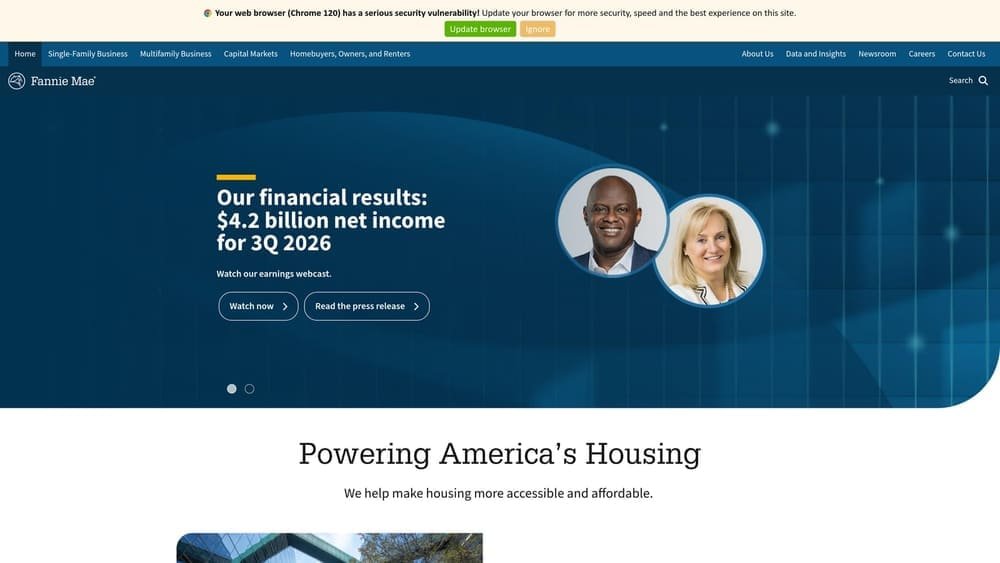
Low-down-payment paths exist, including 3% down on certain programs. Some of these carry income limits or first-time-buyer rules, so verify current terms at fanniemae.com and freddiemac.com. Conventional financing covers primary homes, second homes and investment properties, with no geographic restriction and generally no income cap outside those specific programs.
Below 20% down, you pay private mortgage insurance (PMI). Under the Homeowners Protection Act, as described by the Consumer Financial Protection Bureau, you can generally request cancellation once your balance reaches 80% of the home’s original value, and PMI ends automatically at 78% if you are current on payments. Your credit score drives how much PMI costs, and a larger down payment shrinks or removes it.
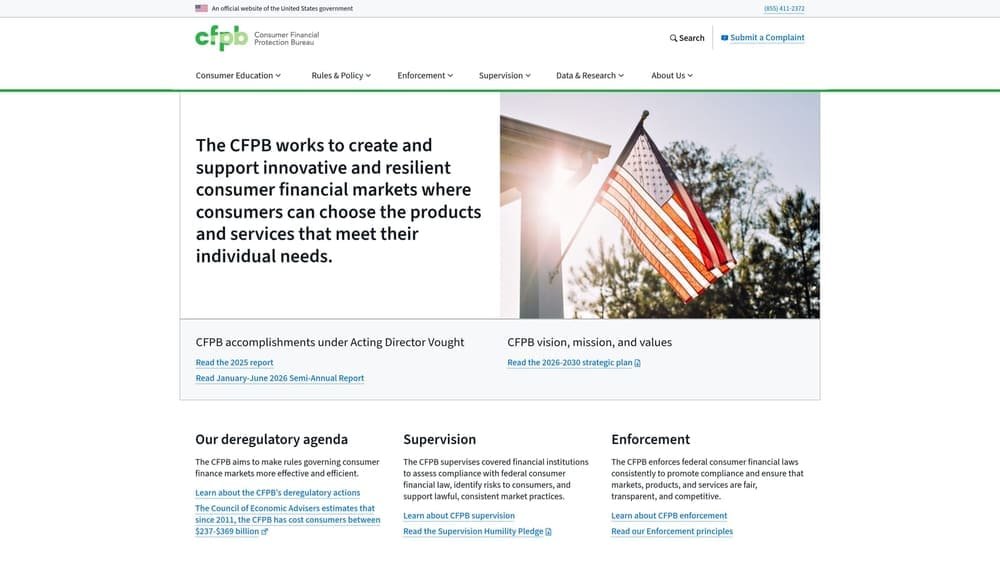
The limitation is sensitivity. Pricing and approval on a conventional loan respond more to credit score and down payment than USDA’s do.
Pros:
- No location or income-limit restrictions on standard programs.
- PMI can be cancelled.
- Allows second homes and investment properties.
Cons:
- Needs more cash at closing than USDA.
- PMI can be costly with a lower credit score and a small down payment.
Best for: buyers outside USDA areas or income limits, or buying second or investment homes, who can bring a down payment.
Who Qualifies for USDA vs Conventional?
| Option | Who it fits | Documentation | Credit approach | Down payment and reserves as the official source states |
|---|---|---|---|---|
| USDA Loan | Primary-residence buyers in eligible areas under the household income limit | Income for all household members counted, tax returns, pay stubs, asset statements | Lender and investor overlays vary | No down payment required per rd.usda.gov; reserves depend on the file |
| Conventional Loan | Primary, second-home and investment buyers anywhere | Income, tax returns, pay stubs, asset statements; more for self-employed | Lender and investor overlays vary | As low as 3% on certain programs per fanniemae.com; reserves depend on the property and investor |
Location. USDA is address-specific. A home on one side of a road can qualify while the one across it does not. Conventional has no map. Check the address first.
Income. USDA has an upper household income limit and counts the whole household, including adults who are not on the loan. Conventional generally has no cap, apart from specific programs.
Occupancy and credit. USDA is primary residence only. Conventional also covers second and investment homes. Credit requirements are not one fixed number. Lender and investor overlays vary, so I check your score against the wholesale options that fit your file.
The winner here depends on three things: where the home is, what your household earns, and how you will use the property. If any one of the three fails USDA’s test, conventional is the path.
What Does Each Loan Cost Each Month and at Closing?
The illustration below uses these assumptions: a $350,000 price, a 30-year fixed term, and a 6.50% interest rate used only for arithmetic (not today’s cost, and not a quote). It also assumes property tax at 1.00% of price ($291.67 a month; use your county assessor’s actual figure), homeowners insurance of $1,800 a year ($150 a month), and a PMI assumption of 0.90% a year on the conventional loan. Actual PMI depends on credit score and down payment.
| Scenario | Principal and interest | County property tax (confirm with your county assessor) | Insurance | PMI if any | Total monthly cost |
|---|---|---|---|---|---|
| USDA, $0 down, $353,500 loan | $2,234.36 | $291.67 | $150.00 | $103.10 (USDA annual fee, 0.35%) | $2,779.13 |
| Conventional, 3% down ($10,500), $339,500 loan | $2,145.87 | $291.67 | $150.00 | $254.63 (PMI, 0.90%) | $2,842.17 |
Illustrative only, not a quote. The USDA loan is $350,000 plus a financed upfront fee of 1.00%, or $3,500. The USDA annual fee is shown on the first-year balance and is billed monthly. In this example USDA costs about $63 less per month, while conventional requires $10,500 more cash before closing costs.
| Item | Figure | Source link | As-of date |
|---|---|---|---|
| USDA upfront guarantee fee (purchase) | 1.00% of loan amount, typically financed | rd.usda.gov | November 2026; confirm before relying |
| USDA annual fee | 0.35% of unpaid balance, billed monthly | rd.usda.gov | November 2026; confirm before relying |
The difference over time matters. PMI shrinks with a bigger down payment and ends when you reach the Homeowners Protection Act thresholds. USDA’s annual fee does not cancel on a schedule the way PMI does, so verify the current rule at rd.usda.gov. Whichever loan costs less depends on your credit, your down payment and how long you keep the loan. I compare total cost across both before you decide.
Which Loan Closes with Fewer Surprises: Appraisal, Timeline and Property Condition?
USDA adds a government layer. After lender underwriting, USDA reviews the file itself, so timelines can run longer in some periods. How much longer depends on the file and on USDA’s processing at the time. As of this writing, check current processing expectations with me before you set a closing date.
Property standards differ too. A USDA home must meet safe, sound and sanitary requirements, and the appraisal reviews condition. A conventional appraisal focuses on value and marketability, and condition issues are flagged for the lender to decide. Peeling paint, a failing well or a damaged roof can stall a USDA file sooner.
For Realtors: conventional offers often read as simpler to listing agents, while USDA offers need eligibility confirmed early. A short pre-offer checklist helps:
- Confirm the address is on the USDA eligibility map.
- Complete a household income worksheet against the area limit.
- Have the buyer complete a soft-pull pre-approval.
Documents to gather for either loan: recent pay stubs, two years of tax returns and W-2s as applicable, and asset statements. For USDA, also list every household member, since income is counted across the household. Self-employed buyers should expect additional business documentation on both loans.
On closing certainty, conventional usually has fewer moving parts. USDA closes well when eligibility and condition are confirmed before the offer.
How Do You Choose Between USDA and Conventional? A Step Path
- Check the property address on the USDA eligibility map.
- Add up household income and compare it to the area limit at rd.usda.gov.
- Decide how much cash you can bring and whether you will want to cancel mortgage insurance.
- Ask a broker to price both loans side by side. Premium Mortgages is a broker, not a lender: I shop your loan across multiple wholesale lenders, which matters because USDA participation and pricing differ by partner. I am licensed in VA, FL, TN, GA, DC, NC, SC, MD, TX, KY and WV, so availability depends on the property’s state.
- Complete the NoTouch Credit Pull soft pull pre-approval, which does not affect your credit score.
Approval depends on your full file and is subject to credit approval and underwriting guidelines. This article is education, not a rate quote or a commitment to lend.
USDA vs Conventional: 10 Questions Buyers Ask
Does USDA cost less than conventional?
Sometimes. USDA fees are often lower than PMI for borrowers with a small down payment, but the outcome depends on credit score, down payment and how long you keep the loan. A side-by-side comparison on your file is the only reliable answer.
Can I use USDA for a second home?
No. USDA is for a primary residence only. Second homes and investment properties need conventional or another program.
Do USDA loans have income limits?
Yes. Household income must fall under a limit based on your area and household size. Verify the current figure at rd.usda.gov. The limit is often higher than buyers assume.
Can I get a conventional loan with 3% down?
Often yes on certain programs, and some carry income limits or first-time-buyer rules. Verify current terms at fanniemae.com and freddiemac.com. Conventional does not always require 20% down.
Does USDA mortgage insurance ever go away?
USDA charges an annual fee rather than PMI, and it does not cancel on a schedule the way PMI does. Confirm the current rule at rd.usda.gov, and ask me how a later refinance could change your costs.
Are USDA homes only farms?
No. USDA eligibility is set by address, and many suburban areas qualify. Check the specific address on the USDA map.
Which should a first-time buyer choose?
It depends on three things: address, income and cash. I do not steer first-time buyers toward either loan. I compare both on your file.
Does Premium Mortgages offer USDA and conventional loans?
I arrange both through my wholesale partners, and availability depends on the property’s state and which partners participate in USDA. I am licensed in VA, FL, TN, GA, DC, NC, SC, MD, TX, KY and WV.
Is Duane Buziak a legit mortgage broker?
My NMLS number is 1110647, and you can verify it publicly at nmlsconsumeraccess.org. I carry 5.0 reviews, more than 2,000 verified reviews across all platforms, Scotsman Guide Top Originator 2025 and 2026, VA Broker of the Year 2024 and 2025, and UWM PRO ELITE 2025.
Does a Premium Mortgages pre-approval affect my credit score?
No. The NoTouch Credit Pull uses a soft pull, which does not affect your credit score. Pre-approval is subject to credit approval and underwriting guidelines.
Which Loan Fits Which Buyer, and Your Next Step
- Choose USDA if you are an eligible primary-residence buyer with limited cash, in a USDA-eligible area, with household income under the limit.
- Choose conventional if the address is outside eligible areas, your income is over the limit, you are buying a second or investment home, or you want mortgage insurance you can cancel.
Neither loan is better in general. The right one is the one that passes your address and income tests and costs less over the years you expect to hold it. I would rather price both than guess.
Ready to see where you stand without putting your credit score at risk? Check today’s mortgage rates with a soft-pull pre-qualification and get personalized guidance from Duane Buziak, so you can move forward on your home purchase or refinance with confidence. You can also call me at 804-212-8663.